How to Organize Your Job Applications as a Student
Nazik
Founder, Aspirev
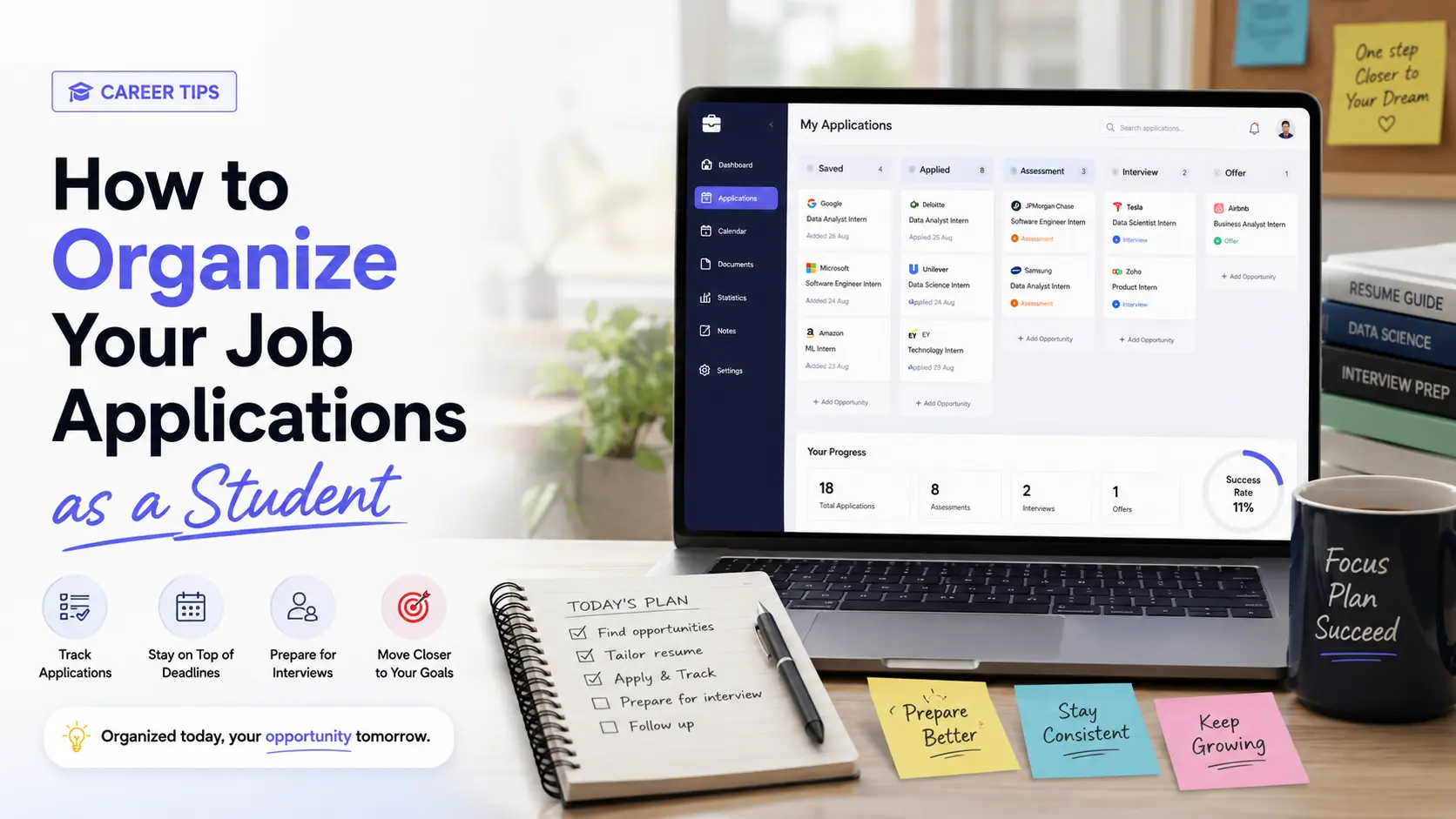
Applying for internships, graduate jobs, and part-time opportunities can quickly become difficult to manage.
At first, you might only apply to two or three positions. You remember the company names, the application dates, and which resume you submitted.
But as your search grows, things become harder. You might start asking:
- Which companies have I already applied to?
- When did I submit that application?
- Which resume did I use?
- Did the company respond?
- Which applications are still active?
- When is my next interview?
Trying to remember everything can turn your job search into a mess. That's why keeping a simple job application tracking system can make a big difference.
Career centers commonly recommend tracking applications, submission dates, interviews, follow-ups, and other important details so students can stay organized and evaluate their job-search progress.
Here's how to build a simple system that keeps your applications under control.
Why Students Lose Track of Applications
The problem usually isn't the number of applications. It's the number of details attached to each application.
One opportunity might involve: Company → Job → Resume → Application → Assessment → Interview → Follow-up → Decision
Now imagine doing this for 10, 20, or 30 opportunities. Your email inbox alone isn't a good job-search management system. You may receive automated emails from companies, recruitment platforms, interview invitations, assessment links, and rejection messages. Without a central record, important information becomes difficult to find.
A tracker gives you one place to see what's happening.
What Should You Track?
You don't need a complicated system. Start with the information that actually helps you make decisions.
1. The Core Details
- Company: The organization you applied to.
- Position: The exact job or internship title.
- Application Date: The date you submitted your application.
- Application Source: (e.g. LinkedIn, Company Website, Career Portal).
2. Status & Pipeline
Instead of thinking about your applications as a long list, think of them as a pipeline: Saved → Applied → Assessment → Interview → Offer → Completed
3. Job Links & Resumes
- Job Link: Keep the original job posting available so you can review it before an interview.
- Resume version: Add a note reminding yourself which version of your resume you submitted (e.g. "Data Science CV v2"). This prevents major confusion later!
4. Next Actions
A status tells you where an application is. A next-action field tells you what you should do about it. For example: "Prepare for technical interview" or "Follow up with recruiter."
Common Tracking Mistakes to Avoid
Tracking the Status, But Not the Action
A tracker isn't just for storing information—it's for helping you decide what to do next.
| Application | Status | Next Action |
|---|---|---|
| Company A | Applied | Wait for response |
| Company B | Interview | Prepare technical questions |
| Company C | Assessment | Complete HackerRank by Friday |
Guessing When to Follow Up
Following up can be useful, but you shouldn't rely on memory to decide when to do it. Record the relevant date in your tracker and use it to determine your next action.
- Application submitted: August 10
- Follow-up reminder: August 17
Applying Just to Increase Your Number
A common mistake is measuring success by the number of applications submitted ("I applied to 50 jobs this month"). A better question is: "What happened after those applications?"
Applications → Responses → Assessments → Interviews → Offers
If you're submitting many applications but receiving very few responses, investigate why rather than just applying to 50 more roles automatically.
Building a Job Search Routine
A tracker becomes much more useful when you actually review it. Set aside a few minutes every week.
A Simple Weekly Routine
- Monday (Find): Look for internships and jobs. Save the strongest opportunities.
- Tuesday–Thursday (Apply): Tailor your resume and apply. Record each application immediately.
- Friday (Review): Check new applications, active applications, upcoming interviews, follow-ups, deadlines, and rejections. Decide what you need to focus on next week.
What Should You Ask Yourself During the Review?
- How many applications did I submit?
- How many responses did I receive?
- Which roles are getting the most responses?
- What should I improve? (e.g., Do I need to tailor my applications better?)
Example of a Student's Tracker
Imagine you're a Computer Science student looking for a Data Science internship. Your tracker could look like this:
| Company | Role | Status | Next Action |
|---|---|---|---|
| Tech Company A | Data Analyst Intern | Applied | Wait for response |
| Company B | ML Intern | Assessment | Complete assessment |
| Startup C | Data Sci Intern | Interview | Prepare for interview |
| Company D | Software Intern | Saved | Review requirements |
At a glance, you know exactly what's happening. No searching through dozens of emails. No wondering whether you already applied.
Stop Relying on Your Memory
A spreadsheet can work perfectly well, but if you are applying regularly, a dedicated application tracker can make the process significantly easier because your applications, statuses, and progress can live natively in one place.
That's where Aspirev's Job Application Tracker comes in.
Instead of keeping application information across: Email + Notes + Browser Bookmarks + Spreadsheets + Your Memory
You can keep your opportunities organized in one place. Your dashboard gives you a clearer view of your career activity while you continue working toward your goals.
Your goal isn't simply to apply to more jobs. Your goal is to become better at the entire process.
Final Checklist
Before finishing your job-search session, make sure:
- Every application has been recorded.
- The company and position are correct.
- The application date is recorded.
- The job link is saved.
- Your current status is updated.
- Your next action is clear.
- Important deadlines are recorded.
- Upcoming interviews are recorded.
- Your resume version is noted when relevant.
- You've reviewed your progress recently.
A few minutes of organization can save hours of confusion later! Your next opportunity deserves your attention—make sure you don't lose track of it.